The Intersection of Women’s Political Participation and the Sustainable Development Goals: A Vision from Jordan for Authentic Empowerment and Structural Transformation
 nwi admin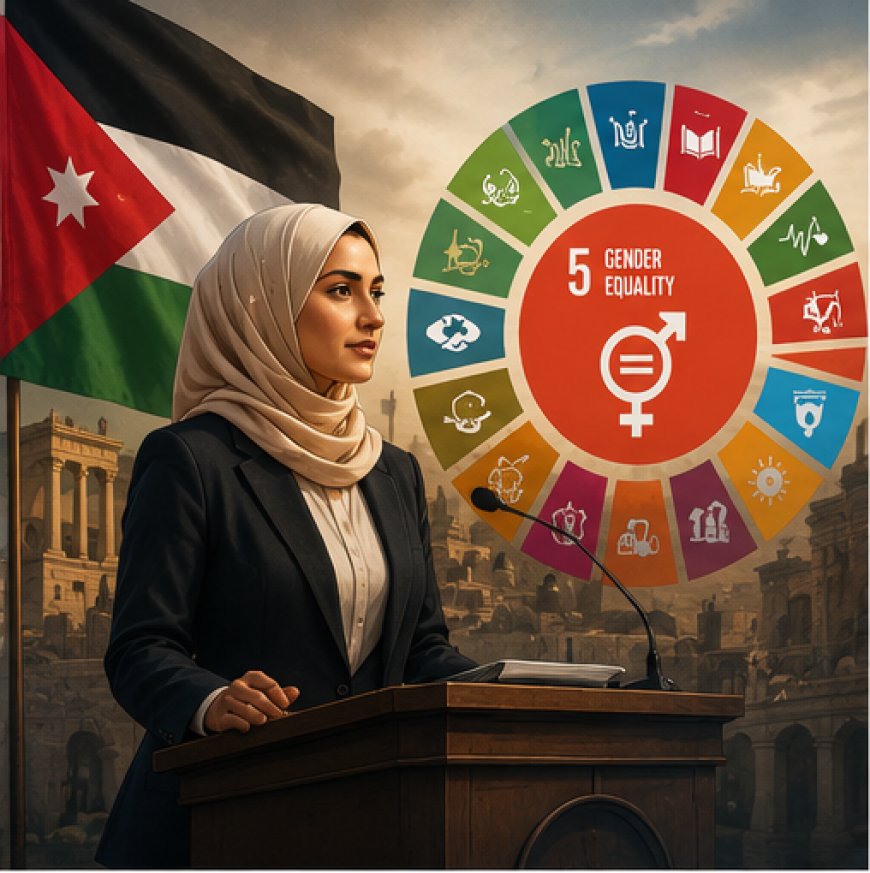
Author: Dr. Hiba Issa Odeh Haddadeen (Fellows; 2025-2026 batch; from Jordan)
Dr. Hiba Issa Odeh Haddadeen is the General Director of the Equality for Training and Human Rights Foundation (Musaweh) in Jordan.
The Intersection of Women’s Political Participation and the Sustainable Development Goals: A Vision from Jordan for Authentic Empowerment and Structural Transformation
Introduction and Contextual Background
Women’s rights and their distinct societal roles are no longer merely ideological slogans championed by feminist movements and human rights organizations over the past decades. Today, they constitute a fundamental index and a critical benchmark for measuring human progress, the institutional maturity of democracies, and the long-term sustainability of national development plans. Amid rapid and intertwined global and regional shifts—be they economic, political, or climate-related—a crucial structural intersection emerges between "Women in Politics" and the "Sustainable Development Goals (SDGs)". This intersection forms an inseparable equation; its pathways cannot be fragmented if we are to achieve genuine social stability, inclusivity, and sustainable justice.
Throughout my professional and academic journey as the General Director of the Equality (Musaweh) for Training and Human Rights Foundation in Jordan, and as a researcher and activist deeply embedded in the field of empowerment and human rights advocacy, I have closely observed the grey rift that separates progressive legislative frameworks on paper from actual daily practices on the ground.
In this context, the fellowship program with the Nuraa Women’s Institute (NWI) served as a strategic milestone. The fellowship’s advanced modules deepened my instrumental understanding of how to employ advanced leadership frameworks, strategic communication, political negotiation, and public speaking to bridge this structural gap.
This analytical paper utilizes the pillars of "Women in Politics" and the "SDGs" to dismantle and evaluate the current Jordanian landscape, drawing on the cross-cutting knowledge provided by the fellowship while exploring both field challenges and promising opportunities to design a more equitable and balanced future.
I. Women in Politics: From Descriptive Proportions to Substantive Representation
The "Women in Politics" module during this fellowship acted as an analytical mirror reflecting, with high precision, our local and regional experiences in Jordan. Historically, Jordan recognized early on the importance of integrating women into the public sphere and decision-making channels. However, this integration has predominantly taken a "quota-based" form. Since 2003,
Jordan has implemented a quota system allocating seats for women in the House of Representatives, an affirmative action mechanism that undoubtedly achieved significant milestones by breaking the "zero-representation" barrier and establishing a visible, familiar female presence under the parliamentary dome, as well as in municipal and governorate (decentralization) councils.
However, the core question we constantly pose at the training workshops and dialogue forums organized by Musaweh is: Does numerical and physical presence necessarily translate into effective political representation and substantive legislative impact?
[Numerical Presence (Quota)] --(Does not automatically equal)--> [Substantive Impact & Leadership]
What the fellowship has solidified in my professional outlook is that a woman’s political leadership does not begin the moment she wins a seat or walks through the gates of parliament. Rather, its roots extend deeply into her pre-existing and continuous capacity to make decisions within her local community, her mastery of expressive tools that enable her to deliver a powerful message (Public Speaking), and her command of strategic Negotiation to pass gender-responsive policies and laws.
Therefore, the immediate challenge facing the Jordanian state and civil society organizations is to orchestrate a generational transition from descriptive tokenism to substantive, transformative representation. This transition demands, as emphasized by the leadership frameworks we explored during the fellowship, a complete re-engineering of capacity-building programs for women leaders. Training must transcend dry legal texts and constitutional provisions to encompass a deep comprehension of dynamic political maneuvering, coalition-building across ideological divides, and tactical negotiation to shift power balances behind closed doors. This is the precise methodology we apply at Musaweh: we do not merely train women on the technicalities of running for office; we build their strategies to manage power, exercise positive influence, and protect institutional gains once leadership is attained.
II. The Sustainable Development Goals: A Holistic Framework for Structural View
While women’s political participation serves as the operational mechanism and driver of change, the Sustainable Development Goals (SDGs) 2030 represent the structural blueprint and moral baseline. The SDGs module in the fellowship played a pivotal role in reorienting the operational priorities of civil society organizations. Work within NGOs occasionally suffers from a siloed approach, confining efforts to narrow, sector-specific projects. The UN goals, conversely, force a broader view that treats development as an interconnected ecosystem.
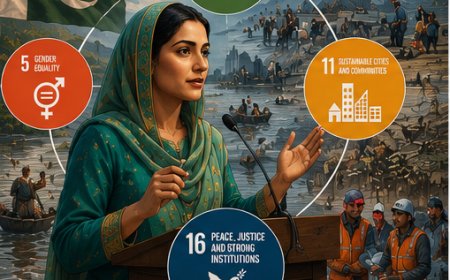
In the context of empowering Jordanian women, SDG 5 (Achieving gender equality and empowering all women and girls) immediately comes to mind. However, as a human rights researcher, I argue that SDG 5 transforms into an isolated wish list if it is not structurally anchored to SDG 16 (Peace, Justice, and Strong Institutions). Women’s political participation is the very essence of institutional efficiency under SDG 16. It is impossible to speak of building strong, transparent, and accountable national institutions, or to claim the realization of sustainable justice, in a society that excludes or marginalizes half of its human and intellectual capital from shaping its social contract.
Although Jordan was among the leading nations to formulate a "National Plan for the Implementation of the 2030 Agenda" and present its Voluntary National Reviews (VNRs), we still face statistical and planning bottlenecks, specifically the lack of sex-disaggregated data. This gap hinders an objective measurement of actual progress toward SDG 5 targets.
For instance, when subjecting local indicators to intersectional analysis, we observe remarkable and commendable progress in the representation of women within the Jordanian judiciary (with unprecedented percentages in civil courts and public prosecution), reflecting a genuine political and reformative will in this sector. Conversely, women's representation in high-level executive decision-making bodies—such as sovereign ministries, governor positions, presidencies of public universities, and boards of major state-owned enterprises—remains modest and below expectations. This structural disparity reveals the hidden cultural obstacles and "glass ceilings" that prevent legal and judicial empowerment from translating into a comprehensive, executive reality.
III. The Current Situation in Jordan: Deconstructing Compounded Challenges
When integrating political participation with the SDGs and mapping them onto the contemporary Jordanian scene, we uncover complex, overlapping layers of structural challenges that require unconventional interventions:
1. Legislative Contradictions and Cultural Disconnect
Jordan witnessed a historic milestone in 2022 with the ratification of new constitutional amendments, which included an explicit clause guaranteeing the empowerment and protection of women from violence and discrimination. This qualitative legal achievement culminated decades of mobilization by the Jordanian feminist and human rights movement.
However, this constitutional gain faces resistance from subsidiary legislation. Structural gaps and contradictions persist within personal status laws and penal codes. This legislative disharmony directly impedes the realization of SDG Target 5.4, which calls for recognizing and valuing unpaid care and domestic work. Traditional social norms continue to relegate the primary burden of care entirely to women, draining their time, psychological energy, and cognitive resources. This deprives them of the "surplus time" required for sustainable engagement in political and party work.
2. The Party System and the New Electoral Engineering
Jordan is undergoing a comprehensive political modernization phase based on the outputs of the Royal Committee for Modernizing the Political System. This has resulted in a new election law and a new political parties law that establish clear numerical targets for integrating women and youth at the core of closed national party lists.
Nevertheless, the challenge lies in the fact that current political parties are still in an embryonic state of formation and merger, often lacking deep institutionalization and internal democracy. In the absence of strong, programmatic parties that adopt gender justice as an integral part of their comprehensive national ideology, women remain dependent on quota-based allocations or conditional support from traditional tribal structures to secure their seats. This dependency strips them of programmatic autonomy and diminishes their capacity to act as independent, effective policymakers.
3. The Economic Dilemma and Political Financing (Intersection with SMEs)
Here lies the organic intersection with the topic of "Women SMEs & Financial Independence" covered in the fellowship. True political empowerment cannot be engineered for a woman experiencing economic dependency. Running for parliamentary or municipal elections in Jordan entails exorbitant financial costs for electoral campaigns, media advertising, and logistical headquarters.
Given that women's economic participation rate in Jordan remains among the lowest globally despite high educational attainment, alongside weak ownership of productive assets and real estate (a direct contradiction of the economic targets of SDG 5), women leaders often find themselves unable to self-finance their campaigns. This reality leaves them vulnerable to dependency on financial or political financiers who impose conservative agendas or narrow interests that completely misalign with the SDGs or feminist aspirations.
IV. The Role of Training and Human Rights in Bridging the Gap: The "Musaweh" Approach
At this critical juncture, the vital mission of the Equality (Musaweh) for Training and Human Rights Foundation manifests, showcasing the practical applications of the fellowship's modules. Dismantling structural challenges cannot be achieved via rhetoric; it requires re-engineering tools and methodologies. Utilizing the advanced insights gained during the fellowship in transformational leadership, interest-based negotiation, and strategic communication, we at Musaweh have developed our training and field programs to include innovative tracks:
- Political and Social Negotiation for Rights: We have shifted negotiation training from a narrow commercial context to the public and political sphere. We train women leaders and candidates on how to manage strategic negotiations with local opinion leaders, tribal figures, party heads, and executive decision-makers. We focus on how women can build win-win scenarios that ensure the inclusion of gender-responsive and SDG-aligned clauses in local municipal budgets and governorate development plans.
- Narrative Building and Strategic Public Speaking: For a female politician to impose her presence, she must possess the ability to construct an "alternative narrative" that moves beyond framing women's issues as soft or secondary sector concerns. Instead, she must present them as matters of national security and macro-economic prosperity. The capacity of a Jordanian woman to stand with confidence before national and international platforms, delivering an analytical speech that bridges economic empowerment (SDG 8) and strong institutional justice (SDG 16), is a skill we prioritize and disseminate in our programs.
- The Intersection of Digital Technology (AI) and Political Action: Although technology was not the primary focus of this paper, it is impossible to overlook its impact as an enabling tool. At Musaweh, we have integrated AI applications and big data analysis into the training of female politicians. We train them on how to utilize digital analytics to understand voter behavior, identify the precise needs of their local communities with scientific accuracy, and manage digital electoral campaigns efficiently and securely. This enhances their competitiveness based on realistic, data-driven platforms rather than traditional allegiances alone.
V. Strategic Recommendations for a Sustainable Political Future for Jordanian Women
Based on the theoretical framework of the SDGs, the practical lessons from the fellowship, and field experience within Jordanian civil society, I present the following strategic recommendations directed at policymakers, formal institutions, and international and local partners:
1. Philosophically and Procedurally Redefining the Quota
The quota system must no longer be treated as a final goal or a ceiling for women's achievements; rather, it should be re-framed as a temporary, transitional affirmative action mechanism. It is recommended to link the continuation or modification of the quota to periodic evaluation mechanisms that measure the legislative and oversight impact of female MPs.
Additionally, "seat incentives" should be introduced for political parties that successfully field and elect women through general party lists via direct, free competition outside the designated quota.
2. Institutionalizing Gender-Responsive Budgeting (GRB)
To achieve tangible SDG targets, the Jordanian Ministry of Finance and local municipalities must strictly institutionalize gender-responsive budgeting. A Jordanian woman cannot fully exercise her leadership and political role if local budgets and infrastructure do not allocate sufficient resources to establish safe public transportation networks or affordable childcare facilities—both of which are essential services to free up women's time, enabling mobility and public engagement.
3. Transforming Media Discourse and Dismantling Stereotypes
Official and private media outlets, along with partner social media platforms, must transition from superficial, seasonal coverage of women's issues to adopting an investigative, analytical discourse. Women must be prominently featured as experts and strategists in economics, energy, security, and foreign policy—not just in social welfare files—thereby dismantling the collective stereotypical mindset of society.
4. Investing in Grassroots Youth Female Leadership
This paper recommends connecting the SDGs directly with municipal, youth, and university student councils. Designing tailored parliamentary and municipal simulation programs for young women in governorates outside the capital forms the authentic incubator for producing future female political leaders who are equipped with the skills of negotiation, crisis management, and alliance-building from an early stage.
Conclusion and Strategic Outlook
In conclusion, this rich and inspiring knowledge journey with the Nuraa Women’s Institute (NWI) fellowship confirms that the path toward empowering women politically and achieving the SDGs in Jordan is not a straightforward, simple track. Rather, it is a long-term marathon that demands continuity of vision, flexibility in strategy, and a constant renewal of cognitive and technological tools.
Integrating women into political life and state structures is not a favor or a gift granted to them; it is an inherent human right and a core component of complete citizenship affirmed by international human rights conventions, which we at Musaweh work to popularize and institutionalize daily. When we succeed in linking this human right to the 17 SDGs, we elevate the cause of women from moral advocacy to a comprehensive development and strategic commitment upon which states rely to ensure national security, social stability, and economic prosperity.
Jordan possesses an immense wealth of female human and academic capital, backed by a decisive and clear royal will to move forward with political, economic, and administrative modernization. Today, with the rise of successive generations of leaders and experts shaped by specialized programs like the NWI fellowship, we possess the knowledge and practical tools required to transform progressive constitutional texts and ambitious international commitments into a daily lived reality where the Jordanian woman thrives as an insightful leader, a wise decision-maker, and an indispensable negotiator in building the future of our beloved nation.