Women SMEs and Financial Independence in the Democratic Republic of Congo
 nwi admin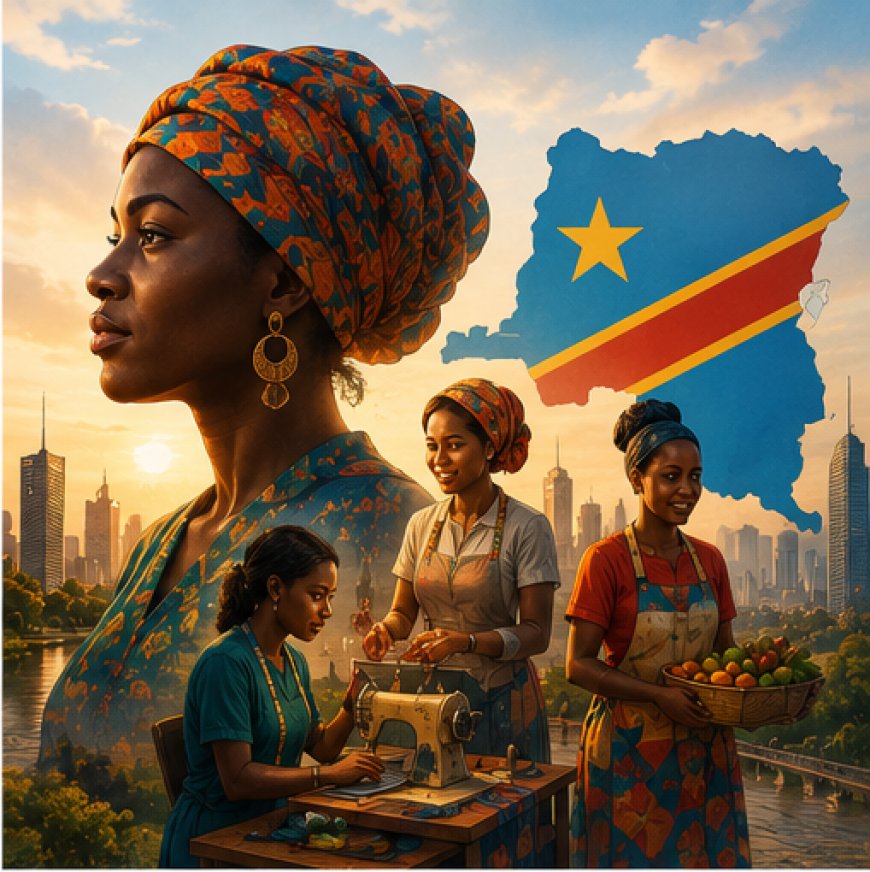
Author: Ms. Christelle Tulia (Fellows; 2025-2026 batch; from the DRC)
Christelle Tulia is a Congolese entrepreneur based in London, United Kingdom, and founder of Congolese and Fabulous Ltd.
.
Women SMEs and Financial Independence in the Democratic Republic of Congo: Leadership, Representation, and the Transformative Impact of the Nuraa Women’s Institute
The Democratic Republic of Congo (DRC) remains one of the most paradoxical nations in the contemporary global order. Despite possessing extraordinary natural wealth and vast economic potential, the country continues to confront profound socio-political and economic challenges shaped by decades of armed conflict, institutional fragility, insecurity, and entrenched gender inequalities. Women in the DRC experience the disproportionate effects of these crises, particularly through sexual and gender-based violence, economic exclusion, and limited access to political decision-making spaces. Yet, within this complexity lies an equally powerful reality: Congolese women remain the principal actors sustaining households, communities, and local economies.
Across rural villages and urban centres alike, women continue to embody resilience, leadership, and social responsibility. They are central to ensuring the survival and welfare of children, maintaining family structures, and preserving social cohesion in contexts often characterised by instability. Simultaneously, women have become indispensable drivers of the informal and local economy through small and medium-sized enterprises (SMEs), agricultural cooperatives, cross-border trading, market commerce, beauty industries, catering services, tailoring, and other forms of entrepreneurial activity rooted in practical skills and community knowledge.
In recent years, the DRC has also witnessed notable progress in women’s representation within political and institutional leadership. The appointment of Her Excellency Prime Minister Judith Suminwa Tuluka, the first female Prime Minister of the Democratic Republic of Congo, symbolises an important historical shift toward greater female participation in governance. Similarly, the appointment of Her Excellency Thérèse Kayikwamba Wagner as Minister of Foreign Affairs reflects the growing visibility of Congolese women in diplomacy and international affairs. Other influential women leaders, including Her Excellency Noëlla Ayeganagato Nakwipone, Deputy Minister of Foreign Affairs alongside women leading portfolios in education, culture, and public administration, continue to reshape perceptions of women’s leadership within Congolese society. Furthermore, the work of Her Excellency Chantal Yelu Mulop, Special Advisor to the President on Youth, Gender, and Violence Against Women, has strengthened institutional efforts aimed at increasing women’s participation, representation, and inclusion in national development processes.
This essay critically examines the relationship between women-led SMEs and financial independence in the DRC while reflecting upon the broader significance of women’s leadership development initiatives such as the Nuraa Women’s Institute Fellowship Programme. It argues that despite persistent structural barriers, Congolese women continue to demonstrate extraordinary resilience through economic participation, community leadership, and political engagement. Moreover, leadership programmes that centre women’s voices and lived experiences are essential in cultivating transformative leadership capable of advancing gender-responsive governance and social change.
Women as Economic Pillars of Congolese Society
In the Democratic Republic of Congo, women occupy a dual role as both caregivers and economic actors. In many communities affected by insecurity, displacement, and poverty, women carry the primary responsibility for household survival. This responsibility extends beyond domestic labour into active participation in economic production and local trade. Consequently, women’s labour has become foundational to the functioning of local economies throughout the country.
Women-led SMEs represent a significant component of economic activity within the DRC, particularly within the informal sector, which accounts for a substantial proportion of employment opportunities. Congolese women engage in agricultural production, food processing, market trading, textile production, hairdressing, cosmetics, catering, and small-scale commerce. Through these activities, women not only generate income for their households but also contribute to broader community resilience and economic circulation.
Importantly, women’s entrepreneurship in the DRC cannot be understood solely through the lens of profit generation. Rather, it is deeply interconnected with survival, dignity, and social responsibility. Financial independence for Congolese women often represents the capacity to educate children, secure healthcare, provide food, support extended families, and reduce vulnerability to exploitation and dependency. In this context, women’s economic participation becomes both an economic and socio-political act.
Nevertheless, women entrepreneurs continue to encounter substantial barriers. Structural inequalities rooted in patriarchal norms often limit women’s access to land ownership, financial services, formal credit systems, and business networks. In conflict-affected regions, insecurity further disrupts trade routes, agricultural production, and market accessibility. Women traders and entrepreneurs are frequently exposed to violence, extortion, and harassment while conducting commercial activities.
Furthermore, the informal nature of many women-led businesses means that their contributions often remain undervalued within national economic frameworks. Despite their centrality to local economies, women’s labour is frequently invisible in official statistics and policy discourse. This reflects broader gendered assumptions that continue to marginalise women’s economic contributions.
However, despite these constraints, Congolese women continue to display remarkable adaptability and innovation. Their ability to transform limited resources and practical skills into sustainable livelihoods reflects not merely survival, but a sophisticated form of economic resilience. Women-led cooperatives, savings groups, and community enterprises increasingly demonstrate the potential of grassroots economic systems to support both individual empowerment and collective development.
Women’s Political Representation and Leadership in the DRC
The increasing representation of women within political and institutional leadership structures constitutes one of the most significant developments in contemporary Congolese governance. Historically, leadership spaces within the DRC have been overwhelmingly dominated by men, reflecting deeply entrenched patriarchal systems that associated authority and governance with masculinity. Women were often excluded from political decision-making despite their extensive contributions to social and economic life.
The appointment of Her Excellency Prime Minister Judith Suminwa Tuluka marked a historic milestone in the political history of the DRC. As the country’s first female Prime Minister, her leadership symbolises both progress and possibility for future generations of Congolese women. Similarly, the appointment of Her Excellency Thérèse Kayikwamba Wagner as Minister of Foreign Affairs has further strengthened women’s visibility within international diplomacy and statecraft.
In addition, leaders such as Her Excellency Noëlla Ayeganagato Nakwipone, Deputy Minister of Foreign Affairs, alongside female leaders within the sectors of education, culture, and social development, continue to challenge traditional assumptions regarding women’s roles within governance. These appointments carry both symbolic and practical significance. Symbolically, they demonstrate that women are capable of occupying positions of national authority. Practically, they create opportunities for more inclusive policy discussions and gender-responsive governance frameworks.
The institutional work undertaken by Her Excellency Chantal Yelu Mulop has also contributed significantly to advancing women’s participation and representation. Through initiatives focused on gender equality, youth empowerment, and combating violence against women, these efforts have strengthened public discourse surrounding women’s rights and inclusion in national development processes.
However, it is important to critically acknowledge that increased representation alone does not automatically guarantee substantive gender equality. Some scholars argue that symbolic inclusion may coexist alongside persistent structural inequalities affecting ordinary women, particularly those in rural or conflict-affected regions. Women leaders frequently continue to encounter sexism, political resistance, and societal expectations that challenge their legitimacy and authority.
This critique remains valid and necessary. Political appointments must ultimately translate into concrete policy reforms that improve women’s access to education, economic opportunities, healthcare, and protection from violence. Nonetheless, representation remains a critical foundation for broader social transformation. The visibility of women in leadership positions disrupts patriarchal narratives and creates new possibilities for future generations of women and girls.
Leadership, Femininity, and the Transformative Experience of Nuraa
One of the most significant lessons I have learned through the Nuraa Women’s Institute Fellowship Programme concerns the importance of embracing leadership through femininity rather than perceiving femininity as incompatible with leadership. In many societies, leadership continues to be associated with masculine traits such as aggression, emotional detachment, and dominance. Women are often encouraged to suppress aspects of their identity in order to be perceived as competent leaders.
The Nuraa fellowship fundamentally challenged these assumptions by demonstrating that empathy, emotional intelligence, collaboration, and community-centred leadership are equally powerful forms of influence. Through the programme, I learned that femininity itself can be a source of leadership strength rather than limitation.
Equally important was the emphasis placed upon active participation and visibility. The fellowship reinforced the idea that women must intentionally enter spaces where decisions are made in order to ensure that women’s voices are represented within policy discussions and institutional processes. Leadership requires presence, confidence, and engagement. Remaining absent from decision-making spaces allows gender inequalities to persist unchallenged.
The programme provided practical leadership training through discussions, simulations, mentorship sessions, and reflective exercises designed to strengthen women’s participation across political, social, and professional sectors. These practical scenarios encouraged women to develop confidence in negotiation, advocacy, public speaking, and policy engagement.
Perhaps most transformative was the diversity of lived experiences represented within the fellowship itself. Women from various sectors, professional backgrounds, and countries contributed perspectives shaped by activism, diplomacy, entrepreneurship, academia, development work, and community leadership. These experiences were not only intellectually enriching but also deeply human and emotionally resonant.
Listening to women discuss their struggles, ambitions, and achievements created a powerful sense of solidarity and collective transformation. The technical expertise shared within these discussions was strengthened by the authenticity of lived experience. Such exchanges illustrated that women’s leadership cannot be understood solely through theoretical frameworks; it must also be grounded in the realities women navigate daily.
Moreover, the inclusion of male participants and facilitators who advocated positively for women’s leadership added important dimensions to the programme. Gender equality cannot be achieved exclusively through women’s efforts. Constructive male allyship remains essential in challenging patriarchal systems and fostering inclusive leadership cultures. Hearing feedback and perspectives from supportive men provided valuable insights into how collaborative approaches can strengthen women’s advancement within institutions and society.
The Nuraa Women’s Institute has therefore demonstrated considerable effectiveness in cultivating women’s leadership through engagement, participation, reflection, and mentorship. By creating spaces where women can develop confidence, share experiences, and strengthen their leadership capacities, the institute contributes meaningfully to broader efforts aimed at increasing women’s political and social participation.
Counter-Arguments and Critical Considerations
Despite the importance of women’s leadership initiatives and empowerment programmes, it is necessary to critically consider certain limitations and counter-arguments. Some scholars and practitioners argue that leadership fellowships and international development programmes often disproportionately benefit educated urban women while excluding those in rural and conflict-affected communities who face the greatest barriers to participation.
This critique highlights important concerns regarding accessibility and inclusivity. Many women across the DRC continue to lack access to education, internet connectivity, healthcare, and financial infrastructure necessary to participate fully in leadership development initiatives. Structural inequalities rooted in poverty and insecurity cannot be resolved solely through individual empowerment programmes.
Additionally, some feminist critiques caution against placing excessive emphasis on women’s resilience without sufficiently addressing institutional failures. Celebrating women’s ability to survive adversity should not absolve governments and international actors from responsibility for addressing systemic injustice, violence, and economic exclusion.
These critiques are both necessary and constructive. However, they do not diminish the value of leadership initiatives such as Nuraa. Rather, they underscore the importance of ensuring that such programmes remain inclusive, accessible, and connected to broader structural reforms. Leadership development and systemic transformation should not be viewed as mutually exclusive processes; instead, they must operate simultaneously.
Women in the Democratic Republic of Congo continue to demonstrate extraordinary resilience, leadership, and innovation despite operating within one of the world’s most complex socio-political environments. Through SMEs, agricultural cooperatives, informal commerce, and community leadership, women sustain households, strengthen local economies, and contribute significantly to social stability and development.
The growing representation of women within political and institutional leadership further reflects important progress toward gender inclusion within Congolese society. Leaders such as Her Excellency Prime Minister Judith Suminwa Tuluka, Her Excellency Thérèse Kayikwamba Wagner, Her Excellency Noëlla Ayeganagato Nakwipone, and Her Excellency Chantal Yelu Mulop symbolise the increasing visibility and influence of women within governance and national development.
My experience with the Nuraa Women’s Institute Fellowship Programme has reinforced the importance of leadership rooted in authenticity, participation, and gender-conscious engagement. The fellowship provided transformative opportunities for reflection, practical leadership development, and dialogue across diverse sectors and lived experiences. Most importantly, it demonstrated that women’s leadership is strengthened through solidarity, mentorship, and collective learning.
Ultimately, the Nuraa Women’s Institute represents an effective and meaningful platform for advancing women’s leadership and participation. Through engagement, reflection, training, and inclusion, the programme equips women with the confidence and tools necessary to influence institutions and contribute to transformative social change. In contexts such as the Democratic Republic of Congo, where women continue to navigate profound structural challenges, such initiatives remain essential not only for individual empowerment but also for the broader pursuit of gender equality and sustainable development.